Template
Indian Wedding Budget & Shagun Register
An Indian wedding is several events with one budget: a sagai, a mehndi and sangeet, a haldi, the shaadi and a reception, paid for by two families, with vendors who want advances on their own dates and relatives who need rooms. Afterwards comes the lena-dena — who gave what, and what to give them at their next occasion. This workbook keeps the money by function and category against the budget, puts every vendor payment due in the coming week on the Dashboard, counts guests and rooms, keeps the shagun register, and settles who owes whom between the two families.
₹999 on Gumroad · Google Sheets (your own copy) · Filled example · Quick Start Guide (PDF) · Delivered by email — see what’s inside below.
What it does
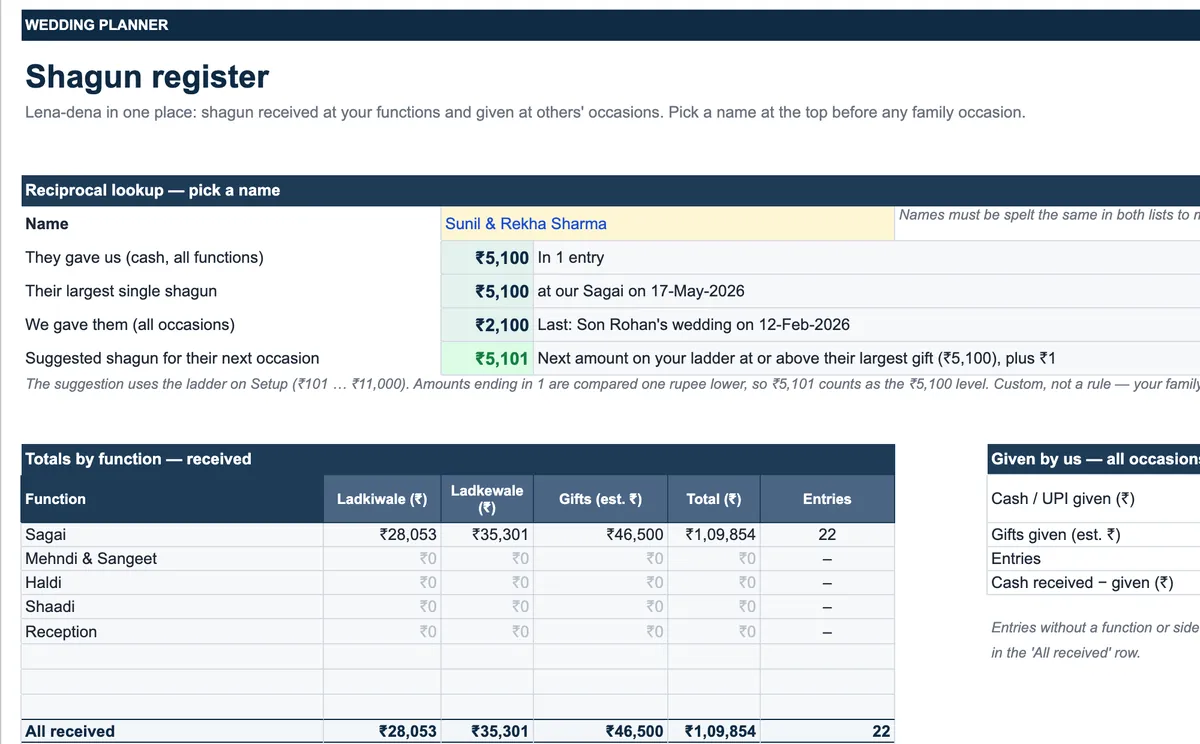
Setup takes the couple, city, dates, total budget and contingency, up to eight functions under your own names, and the shagun ladder of amounts your family uses. Budget Plan splits the budget by category and spreads each category across the functions; the starting split is an editable placeholder. Vendors lists every vendor with the agreed amount, advance percentage, advance and balance due dates, what has been paid and the status; Payments records each payment with vendor, function, category, mode and which family paid. Guests takes one row per family or party with side, number of people, functions invited, RSVP and whether they need a stay; Rooms plans the room block and family rooms with capacity, nights, cost and who is staying where. Shagun Register records shagun received at your functions and given at others’, totals it by side and function, and has a lookup: pick a name to see what they gave, what you gave them, and a suggested amount — the next step on your ladder at or above their largest gift. Family Settlement shows who paid what by side and category and, under the split you agree, who owes whom. Timeline holds the day-of running order for each function and Checklist the planning tasks counted back from the wedding date.
Who it’s for
- Families planning a multi-function Indian wedding, whatever the functions are called in their tradition.
- Couples and families sharing the costs between both sides who want the settlement to be plain.
- Wedding planners who want a clean budget and vendor tracker to share with a family.
Fields included
How to use it
- In Setup, type the couple, city, dates, total budget and contingency, rename the functions and set your shagun ladder.
- Adjust the category split in Budget Plan to your own priorities.
- Add each vendor with the agreed amount and due dates, and record every payment with the function, category and side that paid.
- Add guests by family with the functions they are invited to and their RSVP, then plan rooms.
- Record shagun as it is received and given, and use the lookup before any family occasion.
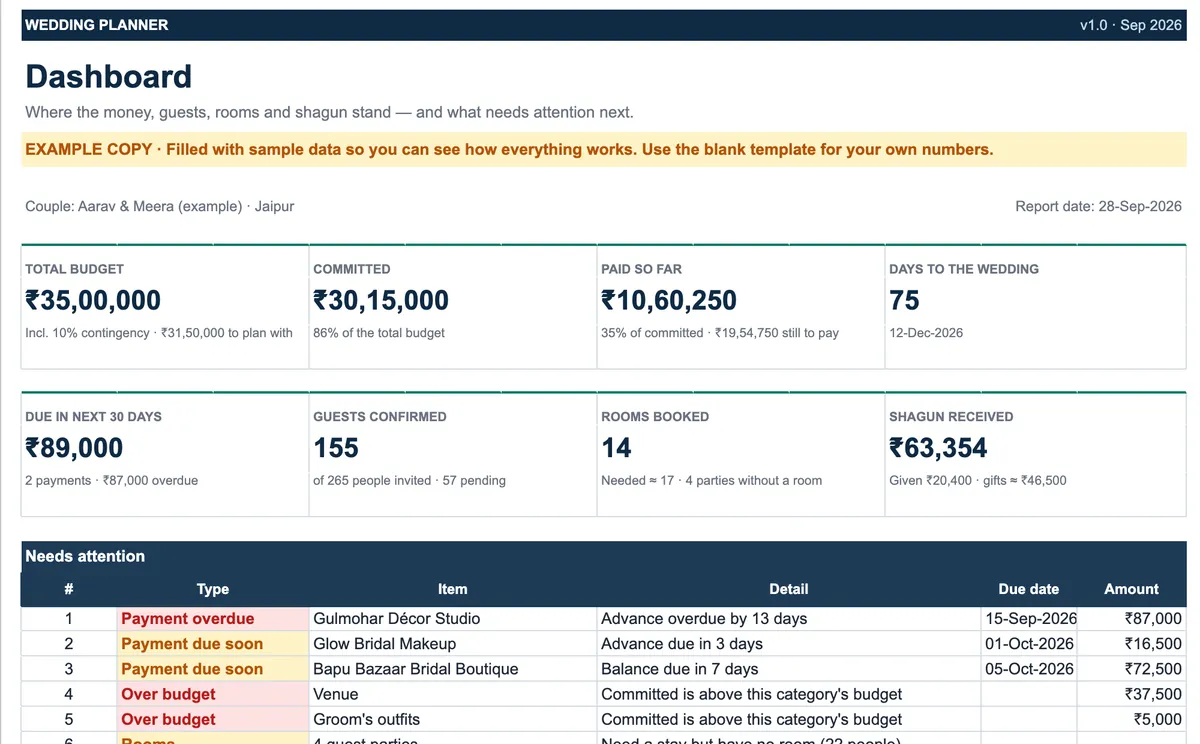
- Check the Dashboard every few days for payments due, over-budget categories, rooms and RSVPs.
Preview
₹999
Get it on Gumroad ↗Google Sheets (your own copy) · Filled example · Quick Start Guide (PDF) · Delivered by email
Sold by Jay Sudha. Checkout and delivery by Gumroad.
Example workflow
The EXAMPLE file plans a fictional wedding in Jaipur, 75 days out, on a ₹35,00,000 budget that includes a 10% contingency. Vendors have been committed for ₹30,15,000 — 86% of the budget — and ₹10,60,250 of that is paid, leaving ₹19,54,750 to find before the day. The Dashboard’s first line is the one that would otherwise surface as an angry phone call: a décor advance of ₹87,000 is 13 days overdue, and two more payments fall due within the week. Two categories are committed above their budget; 155 of 265 invited guests have confirmed and 57 have not replied; 14 rooms are booked against about 17 needed, with four parties still without one. The shagun register shows ₹63,354 received so far, and the lookup, for a couple who gave ₹5,100 at the sagai, suggests ₹5,101 for their next occasion from the family’s own ladder.
Frequently Asked Questions
Reviews
No reviews yet.
Bought this template? Review it
I read every review and publish it here, with the name you give, once I have matched your email to a Gumroad purchase. Your email is never shown. Privacy Policy